The Preferred Powerhouse: 2026’s Hybrid Yield Advantage
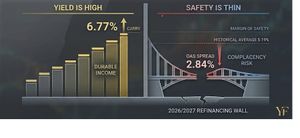
In the current "higher for longer" interest rate environment of 2026, preferred stocks are occupying a very specific and lucrative niche. With yields on some broad preferred indexes currently hitting 6.5% to 7%, they are competing directly with "junk" bonds but with a significantly different risk profile and tax treatment.
The Hybrid Nature: Why "Preferred"?
Preferred stocks sit in the middle of a company's capital structure. They are "preferred" because their dividends must be paid out before common shareholders get a dime. In a liquidation, you also stand ahead of common shareholders (though still behind bondholders).
For the retiree, the appeal is twofold:
- Price Stability: Because they pay a fixed dividend, they trade more like bonds. They don't have the wild swings of the S&P 500, but they also don't have the same "moonshot" growth potential.
- The QDI Edge: This is the "secret sauce" for 2026. Many preferred dividends are classified as Qualified Dividend Income (QDI). This means they are taxed at the lower long-term capital gains rate (0%, 15%, or 20%) rather than your ordinary income tax rate. If you are in a high tax bracket, a 6% preferred yield can actually be more valuable than an 8% bond yield.
The 2026 Environment: Rates and Reset Spreads
As we move into the second half of 2026, the market is focused on "Fixed-to-Floating" preferreds. Many preferreds issued years ago are hitting their "reset" dates. If rates stay elevated, these dividends "reset" to a higher level based on a spread over a benchmark like SOFR (the Secured Overnight Financing Rate). This makes them a natural hedge against inflation and persistent high rates.
The Risks: Callability and Concentration
- The Call Risk: Most preferreds are "callable," meaning the company can buy them back from you at a set price (usually $25) after a certain date. If you buy a preferred at $27 and the company calls it at $25, you’ve just taken a $2 loss. The Desk's Rule: Always check the "Yield to Call" before buying.
- Sector Concentration: The preferred market is dominated by Banks and Insurance companies. If you buy a broad preferred fund, you are essentially making a massive bet on the health of the financial sector. In 2026, while banks are well-capitalized, this concentration is something every retiree should monitor.
How to Gain Exposure
I recommend using diversified funds to manage the "call risk" and sector concentration for you:
- The Passive Giant (ETF): iShares Preferred and Income Securities ETF (PFF)The $13 billion behemoth of the space. It is the most liquid way to play the market, offering broad exposure to both retail ($25 par) and institutional preferreds. It currently yields around 6.4%. It’s the "index play" for those who want the market average.
- The Active Quality Play (ETF): First Trust Preferred Securities and Income ETF (FPE)This is an actively managed fund, which is crucial in 2026. The managers can navigate away from companies with high call risk or those in struggling sub-sectors. Because it's active, it can hold both U.S. and international preferreds, giving you a more global "yield footprint."
- The "Discount" Specialist (CEF): Nuveen Preferred & Income Opportunities Fund (JPC)As a Closed-End Fund, JPC often trades at a discount to its Net Asset Value. In 2026, we’ve seen this discount widen occasionally, offering a chance to buy a 7%+ yielding portfolio at 90 cents on the dollar. It uses a modest amount of leverage to boost the yield, so expect slightly more "bounce" in the share price.
The Bottom Line
In 2026, preferred stocks are the "Income Bridge." They give you the tax-advantaged yields of a stock with the relative price stability of a bond. By focusing on "Fixed-to-Floating" structures and using diversified funds like PFF or FPE, you can build a high-income sleeve that keeps more money in your pocket after the IRS takes its cut.