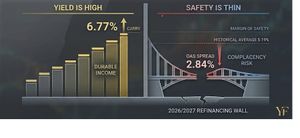
The Secret to 9% Tax-Equivalent Yields
For the DIY retiree in a high tax bracket, the 2026 municipal bond market is offering a rare "math advantage." While nominal yields on high-yield corporate bonds are hovering around 7-8%, the tax-equivalent yield on high-yield munis is currently touching 9% or higher for those in the top federal brackets.
As we move through the second quarter of 2026, the "muni" landscape is being reshaped by a massive surge in infrastructure spending—specifically in water, sewer, and data-center-related power projects.
The Opportunity: The "Steep" Curve
One of the most compelling features of the 2026 muni market is the steepness of the yield curve. Unlike the Treasury market, which has struggled with inversions, the municipal curve offers a significant "reward" for investors willing to look 10 to 15 years out.
For the retiree, this means you can capture a "roll-down" effect. As your 15-year bond ages and becomes a 10-year bond, its price naturally tends to rise as it moves down the yield curve. It’s a way to get a "hidden" capital gain on top of your tax-free monthly checks.
The Risks: Idiosyncratic Credit & The "Supply" Surge
The primary risk in 2026 isn't a broad wave of municipal bankruptcies—state reserves are actually at record highs. Instead, the risks are idiosyncratic. * Supply Pressure: Municipalities are expected to issue nearly $600 billion in new debt this year to fund infrastructure. This heavy supply can temporarily weigh on bond prices if demand doesn't keep pace.
- Selectivity Matters: We are seeing stress in very specific "junk" muni sectors, like high-risk senior living facilities or speculative commercial projects. This is not a market where you want to buy "blind" individual bonds. You want a professional manager who can sniff out the difference between a high-yield water project and a failing charter school.
Calculating Your "Real" Yield
Before you buy, you have to do the math. A 4.5% tax-free yield might sound lower than a 7% corporate bond, but if you are in the 37% federal bracket (plus the 3.8% ACA surcharge), that 4.5% is actually equal to a 7.6% taxable yield. > The Desk’s Rule of Thumb: In 2026, if the tax-equivalent yield on a muni fund is higher than the yield on a comparable Corporate High-Yield ETF, the muni is the mathematically superior choice.
How to Gain Exposure
Because credit research is so vital in the high-yield muni space, I recommend using diversified funds rather than picking individual projects:
- The Core Choice (ETF): VanEck High Yield Muni ETF (HYD)This is the "blue-chip" high-yield muni fund. It’s diversified across hundreds of holdings, focusing on the higher-quality end of the high-yield spectrum (BB-rated and non-rated). It offers a 30-day SEC yield of roughly 4.3% to 4.5%, which, for many retirees, clears that 7.5%+ tax-equivalent hurdle.
- The Active Management Choice (ETF): Nuveen High Yield Municipal Income ETF (NHYM)Nuveen is a legendary name in the muni world. Unlike a passive index, this fund is actively managed, meaning the team can steer clear of those "idiosyncratic" risks like failing hospital systems or over-leveraged toll roads. It currently offers a distribution rate north of 4.6%.
- The Short-Duration Alternative (ETF): iShares Short Duration High Yield Muni Active ETF (SHYM)If you are worried about interest rates staying "higher for longer" and don't want to lock your money away for 15 years, SHYM is the defensive play. It targets the shorter end of the curve (averaging about 4-5 years), offering a tax-equivalent yield around 7.4% with much less price volatility than its longer-term peers.
The Bottom Line
In 2026, high-yield munis are the "bridge" between safety and income. By sticking to institutional-grade ETFs like HYD or NHYM, you can bypass the research headache and capture a tax-free stream of income that rivals the stock market’s historical returns—without the stock market’s heart-attack volatility.